 11
11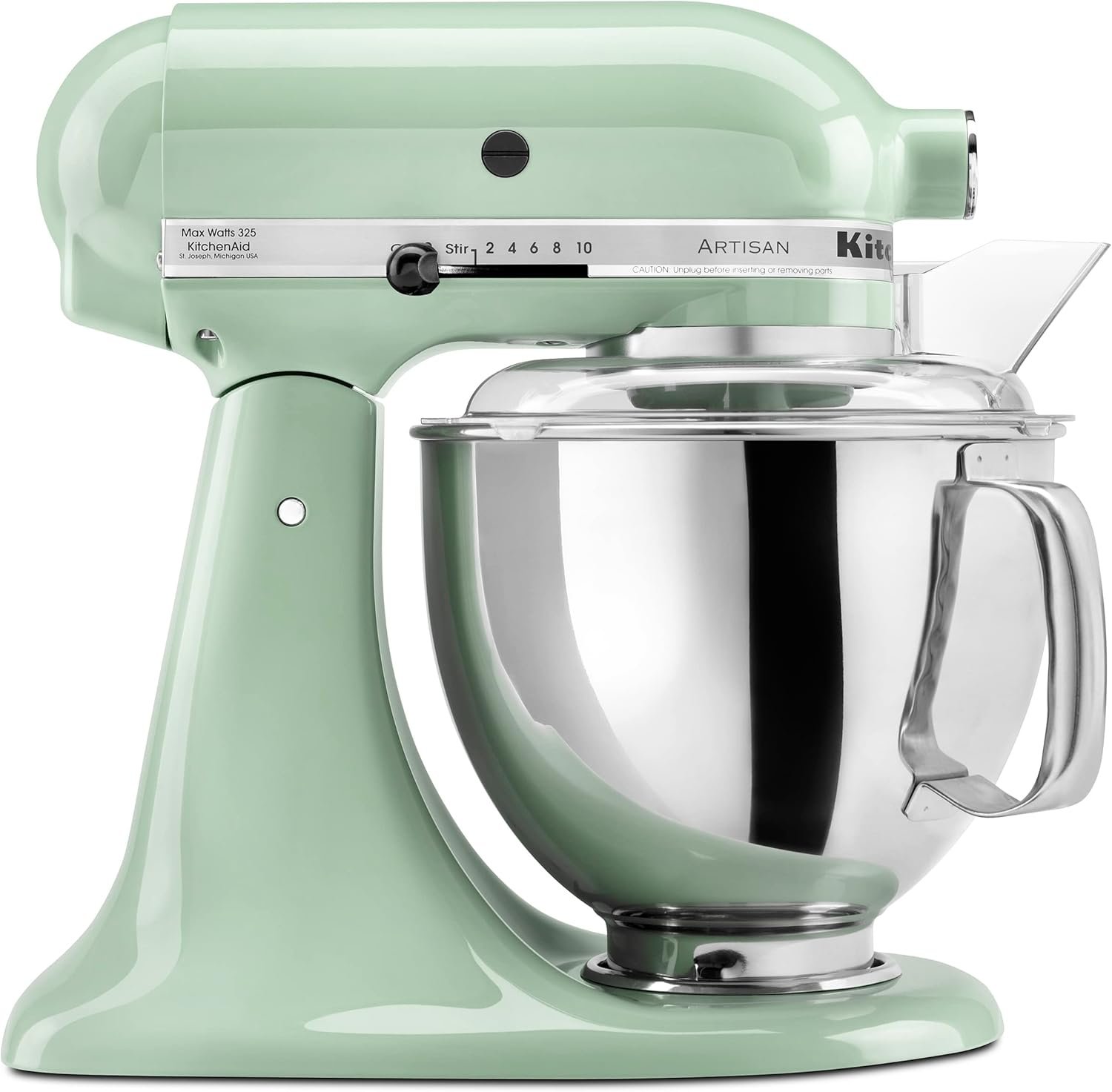
Few kitchen appliances carry the kind of recognizable design and long-standing reputation that the KitchenAid stand mixer has built over the decades. The Artisan series, including this 5-quart tilt-head model in Pistachio, represents one of the more accessible entry points into KitchenAid’s stand mixer lineup, aimed at home bakers who want a reliable, multi-purpose mixing tool without stepping into the larger bowl-lift models designed for more intensive or frequent use.
This article looks at what this particular mixer offers, how it fits into everyday baking and cooking routines, and what’s worth thinking about before deciding if it matches your kitchen needs.
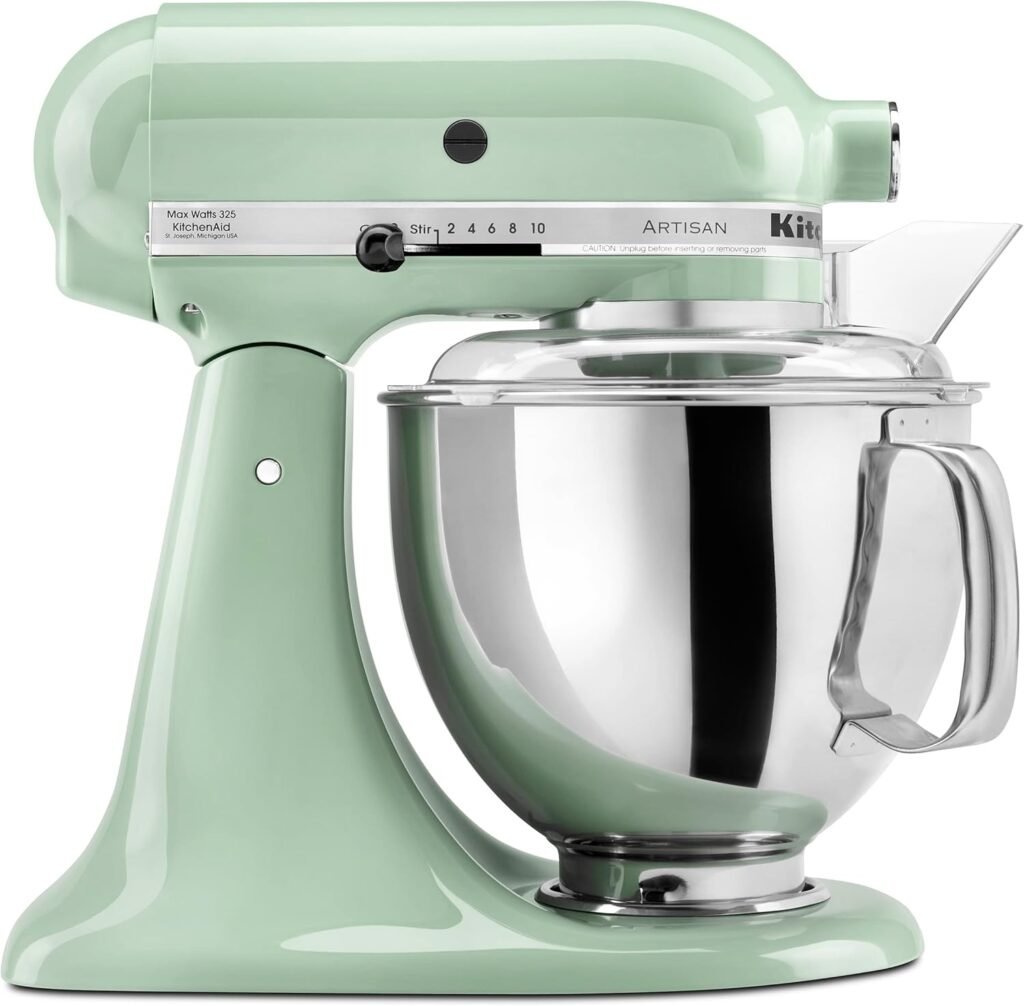
The KitchenAid Artisan KSM150PS is a 5-quart tilt-head stand mixer, a design that has remained largely consistent across KitchenAid’s mid-sized mixer lineup for years, with incremental updates to motor performance, attachment compatibility, and available color finishes. The tilt-head design refers to the way the mixer head lifts upward and back, providing open access to the mixing bowl for adding ingredients or swapping attachments, as opposed to bowl-lift models where the bowl itself raises and lowers along fixed side rails.
This particular model comes with 10 speed settings, a pouring shield attachment designed to reduce ingredient splatter and spillage, and the Pistachio color finish, which reflects KitchenAid’s tendency to offer its mixers in a wide range of aesthetic options for kitchens where appliance color coordination matters.
As a mid-sized mixer, the Artisan line is often positioned as a versatile option for regular home baking, falling between smaller hand mixers and KitchenAid’s larger, more heavy-duty bowl-lift mixers designed for very frequent or commercial-adjacent use.
The mixer includes a 5-quart stainless steel bowl, which is generally sized to handle everyday baking tasks such as cookie dough, cake batter, and bread dough for standard household recipes. This capacity tends to accommodate most common recipes without needing to mix in multiple batches, though very large-batch baking may still require some planning around bowl capacity.
The tilt-head mechanism allows the mixer head to lift up and back, exposing the full bowl opening. This design choice is intended to make it easier to add ingredients gradually during mixing, scrape down the sides of the bowl, or swap attachments and beaters without needing to maneuver around a fixed mixer head. It also tends to make the mixer somewhat easier to store under standard kitchen cabinets compared to taller bowl-lift models.
With 10 speed options, the mixer is designed to handle a range of mixing tasks, from slow stirring and ingredient incorporation to faster whipping speeds needed for tasks like whipping cream or egg whites. Having multiple speed increments allows for more precise control depending on the specific recipe or mixing stage.
The included pouring shield fits around the top of the mixing bowl and is designed to help guide ingredients into the bowl while mixing, reducing splatter and mess, particularly when adding dry ingredients like flour or powdered sugar gradually during operation. This can be a practical addition for recipes that involve slowly incorporating ingredients while the mixer is running.
KitchenAid’s Artisan series mixers are generally built with a direct-drive transmission system, designed to maintain consistent power delivery to the beater regardless of speed setting or mixture thickness. This is intended to help the mixer handle denser doughs, like bread or cookie dough, without straining or overheating during normal use.
Like most KitchenAid stand mixers, this model includes a power hub at the front of the unit, compatible with a wide range of additional KitchenAid attachments sold separately, such as pasta rollers, food grinders, and spiralizers. This expands the mixer’s potential functionality well beyond basic mixing tasks, for those interested in exploring additional attachments over time.
Standard included attachments typically consist of a flat beater for general mixing tasks, a wire whip for whipping cream or eggs, and a dough hook for kneading bread and pizza dough. Having these three core attachments included allows the mixer to handle a broad range of common baking and cooking tasks right out of the box.
Beyond functionality, this particular model comes in KitchenAid’s Pistachio finish, part of the brand’s broader effort to offer stand mixers as both functional appliances and kitchen decor elements. For many buyers, the visual design and color options are as much a consideration as the mixer’s technical specifications.
Stand mixers like the KitchenAid Artisan tend to become a central tool in a home baker’s kitchen, supporting a wide variety of recipes and techniques.
Cookie and cake batters. The flat beater attachment is generally used for creaming butter and sugar together, incorporating eggs, and mixing cake or cookie batters to a consistent texture without overmixing.
Bread and pizza dough. The dough hook attachment is designed to knead yeasted doughs, reducing the need for extensive hand-kneading and helping develop gluten structure more consistently for bread, rolls, and pizza dough.
Whipped cream and meringues. The wire whip attachment is suited for whipping cream to soft or stiff peaks, as well as preparing meringues or whipped egg whites for recipes like macarons or soufflés.
Mixing pancake or waffle batter. For quicker recipes, the mixer can also handle simpler batters, offering more consistent mixing than manual whisking, particularly for larger batches.
Homemade pasta (with additional attachments). For those interested in expanding functionality, the attachment hub allows for accessories like pasta roller attachments, letting the same base unit support homemade pasta-making in addition to standard baking tasks.
Frosting and buttercream preparation. The mixer’s range of speeds makes it suitable for preparing smooth, well-incorporated buttercream frosting, which often benefits from extended mixing time at controlled speeds.
Mixing thicker doughs like biscuits or scones. With its direct-drive motor, the mixer is generally capable of handling thicker, less liquid doughs without excessive strain, making it useful for recipes beyond just bread and cookies.
The KitchenAid Artisan 5-Qt Tilt-Head Stand Mixer tends to appeal to a fairly broad range of home cooks and bakers, particularly those who fall into the following categories:
Those who bake very frequently, in large batches, or on a near-commercial scale may want to consider KitchenAid’s larger bowl-lift mixers, which are generally built with larger bowl capacities and more heavy-duty motors suited to sustained, high-volume use.
While 5 quarts is generally sufficient for most standard home baking recipes, those who frequently double recipes or bake in very large batches should consider whether this capacity meets their typical needs, or whether a larger bowl-lift model might better suit more demanding baking habits.
Even with its relatively compact tilt-head design, stand mixers are still fairly substantial countertop appliances. It’s worth measuring available counter space, as well as clearance needed for the tilt-head mechanism to lift fully, particularly if storing the mixer under upper cabinets.
While the mixer includes core attachments like the flat beater, whip, and dough hook, additional specialized attachments—such as pasta rollers or food grinders—are typically sold separately. Buyers interested in expanding the mixer’s functionality over time should factor in these potential additional costs.
While the direct-drive motor is designed to handle a range of dough consistencies, very dense or large-batch bread doughs may require more careful attention to avoid straining the motor, particularly compared to larger, more heavy-duty mixer models designed specifically for frequent bread-making.
Like most stand mixers, this model will generate noise during operation, particularly at higher speeds or when mixing denser ingredients. This is generally typical of stand mixers as a category, but worth noting for those sensitive to kitchen appliance noise.
Since this particular listing is for the Pistachio finish, buyers who have a specific kitchen color scheme in mind should confirm this shade aligns with their preferences, as KitchenAid mixers are also available in numerous other color options that may better suit different kitchen aesthetics.
Understanding where this model fits within the broader stand mixer market can help clarify realistic expectations.
Hand mixers are generally the most compact and affordable option, suitable for lighter mixing tasks like whipping cream or preparing simple batters, but typically lack the power and capacity needed for denser doughs or larger batches.
Tilt-head stand mixers, like the KitchenAid Artisan KSM150PS, occupy a middle ground, offering more power and capacity than hand mixers while remaining relatively compact and suited to regular home baking needs, without the larger footprint of bowl-lift models.
Bowl-lift stand mixers are generally built for larger batch sizes and more frequent or intensive use, often featuring larger bowl capacities and more robust motors, making them a common choice for serious home bakers or those baking at a near-commercial scale.
Each category serves different needs, and the right choice typically depends on how often you bake, the typical batch sizes involved, and how much counter or storage space is available in your kitchen.
Is the 5-quart bowl large enough for a standard batch of cookies? Yes, a 5-quart capacity is generally well-suited for standard cookie, cake, and bread recipes, comfortably handling most household batch sizes without needing to mix in multiple rounds.
Can this mixer handle bread dough? The included dough hook attachment is designed for kneading yeasted bread and pizza dough. For most standard home bread recipes, this mixer is generally capable of handling the kneading process, though very large or dense dough batches may require more attention to avoid overworking the motor.
What is the benefit of the tilt-head design compared to bowl-lift models? The tilt-head design allows the mixer head to lift up and back, providing open access to the bowl for adding ingredients or swapping attachments. It also tends to have a more compact overall footprint, which can make storage under standard cabinets easier compared to taller bowl-lift models.
Can I use other KitchenAid attachments with this mixer? Yes, this model includes a compatible power hub, allowing it to work with a range of additional KitchenAid attachments sold separately, such as pasta rollers, food grinders, and other specialized accessories.
What does the pouring shield attachment do? The pouring shield fits around the top of the mixing bowl and is designed to help guide ingredients into the bowl while the mixer is running, reducing splatter and mess, particularly useful when gradually adding dry ingredients like flour.
Is this mixer suitable for frequent, heavy-duty baking? While capable of handling regular home baking tasks, those who bake very frequently or in large batches may want to consider KitchenAid’s larger bowl-lift mixers, which are generally designed for more intensive or sustained use.
The KitchenAid Artisan 5-Qt Tilt-Head Stand Mixer (KSM150PS) in Pistachio brings together a well-established mixer design with practical features like 10 speed settings, a pouring shield for reduced mess, and compatibility with KitchenAid’s broader attachment ecosystem. Its tilt-head design and 5-quart capacity make it a reasonably versatile choice for everyday home baking, from cookies and cakes to bread dough and whipped toppings.
As with any kitchen appliance investment, considering your typical baking frequency, batch sizes, and available counter space can help determine whether this particular model aligns well with your kitchen habits and long-term needs.